Every week we get an inquiry that reads something like: "Need rattan ceiling fan with light, 500 pcs, best price." Fair enough. But after fifteen years of making woven lighting here in Zhongshan, we can usually tell within two emails whether an order is going to go smoothly or turn into a back-and-forth mess. The difference is almost never the price. It is the questions the buyer asks — or doesn't.
So this is the guide we wish every new customer would read before ordering a rattan-woven ceiling fan light from us or, frankly, from anyone.
How a woven fan light actually gets made
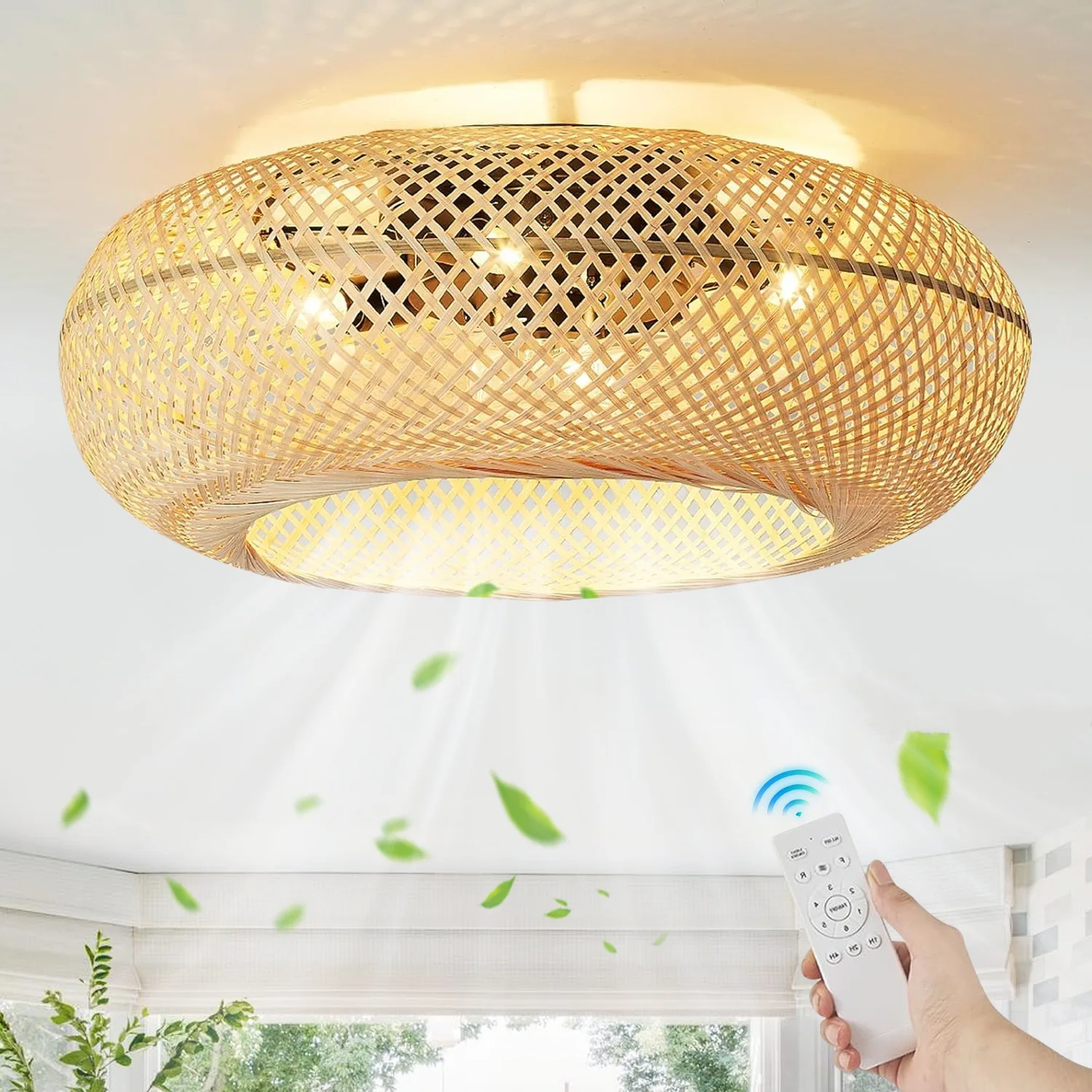
People imagine a production line. For the woven shade, there isn't one. Rattan and bamboo shades are woven by hand, mostly by workers who learned the craft on furniture, not lighting. A medium cage shade takes an experienced weaver the better part of an hour. That single fact explains most of what surprises importers about this category:
- Lead times run 25–35 days, not the 15 you might get on an all-metal fixture. Weaving capacity is the bottleneck, and it doesn't scale by adding a machine.
- No two shades are perfectly identical. Weave tension varies slightly by hand. We hold diameter to about ±5 mm; if a buyer needs tighter than that, natural weave is the wrong material and we'll say so.
- Peak season is real. Orders placed in February ship comfortably before summer. Orders placed in May join a queue behind everyone else who waited.
The motor, frame and electrics are a different story — that part is standard lighting manufacturing. The iron frames are welded and powder-coated, blades are balanced, and everything gets a run test before packing.
Five questions that tell us a buyer knows what they're doing
1. "Is the motor AC or DC, and what's the input voltage?"
Most of our woven fan lights now run low-voltage DC systems (36V or below) with an external driver. DC motors are quieter, use roughly 60% less power, and make stepless speed control possible. But if your market still expects a plain AC pull-chain fan, say so early — the frame design changes.
2. "How do you pack a woven shade so it survives the container?"
Honest answer: foam corner blocks, an inner carton, and a shade that ships nested or flat-packed where the design allows. We drop-test cartons from 80 cm because that is roughly what happens in real handling. Ask any supplier what their carton drop test looks like. If the answer is vague, the breakage rate will not be.
3. "Can I get the blades in wood grain instead of plain white?"
Usually yes — our American retro straight-blade model pairs wood-grain blades with an iron body, and the blade finish is a swap, not a retool. Finish changes are cheap; shape changes are not. Knowing which is which saves everyone a week of emails.
4. "What certifications do you hold for my market?"
CE for Europe, and check whether your customs code needs the fan tested as a fan, a luminaire, or both. It differs by country and it is genuinely boring — which is exactly why it causes delays when nobody checks.
5. "What's the real MOQ per model?"
For stocked designs, small trial orders are workable because the weave is the same across colorways. For a custom weave pattern, the setup only makes sense from a few hundred pieces. A supplier who says yes to 50 pieces of a fully custom design is either quoting sample-room labor at production prices, or planning to disappoint you.
What we'd tell a first-time importer
Start with two or three proven designs instead of ten experimental ones. Order a sample of each — yes, pay for the samples; a factory that sends free samples to every inquiry is pricing that cost into somebody's order, probably yours. Check the weave up close, run the fan for an hour, listen to it. A good DC fan light at full speed should be quieter than your refrigerator.
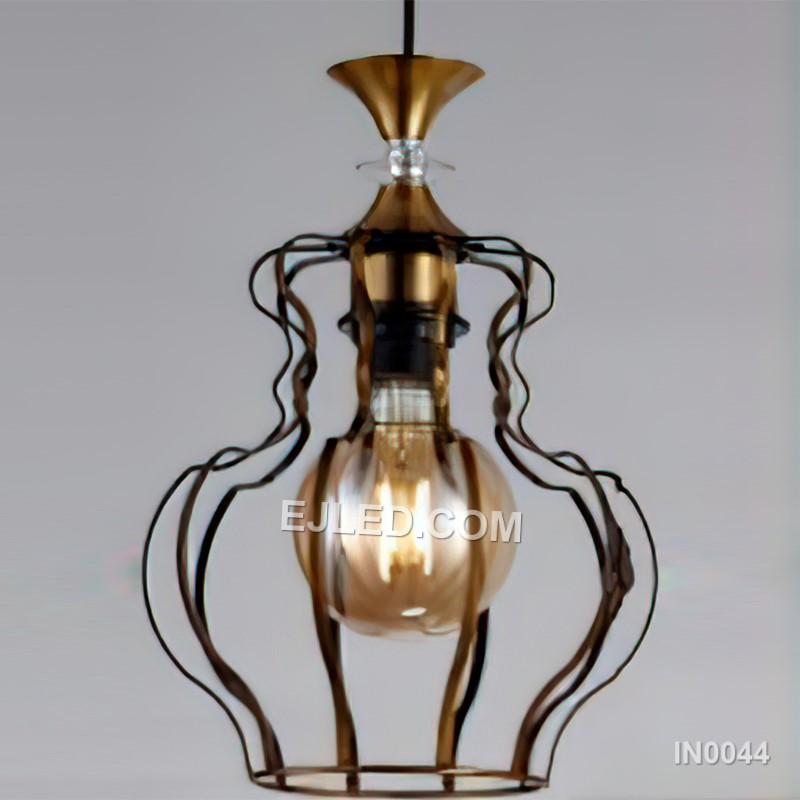
And ask your supplier what sells. We see order data from dozens of markets, and we will happily tell you that, for instance, the medieval-style rattan cage design has been reordered by three different continents this year while some designs we personally love sit quietly in the catalog. A factory's reorder list is free market research. Use it.
Quick FAQ
Do rattan fan lights work in humid climates? Yes, with sealed finishes on the weave and stainless or coated hardware. Tell us the destination market — coastal Southeast Asia gets different hardware than inland Europe.
Remote control or app control? Both exist; remote is standard, app control adds a Wi-Fi module. See our thoughts in the invisible-blade app-controlled model — that one ships with both.
Can you do our brand's packaging? Yes, from label-only to full custom cartons. Label-only is free above modest quantities; printed cartons need volume to justify plates.
If you're building a fan light program for next season, send us your target retail price and market, and we'll tell you honestly which of our designs fit and which don't. That conversation takes ten minutes and saves a container of regret.