A buyer once sent us a Pinterest board with eleven fan lights on it and asked for "this style." Eight were rattan, two were bamboo, one was jute rope wrapped over an iron frame. To a camera they're cousins. To the people who weave them — and to the freight company, and to the end customer wiping dust off them two years later — they are three different products.
Since we build all three under one roof, here is the plain comparison.
Rattan: the default for a reason
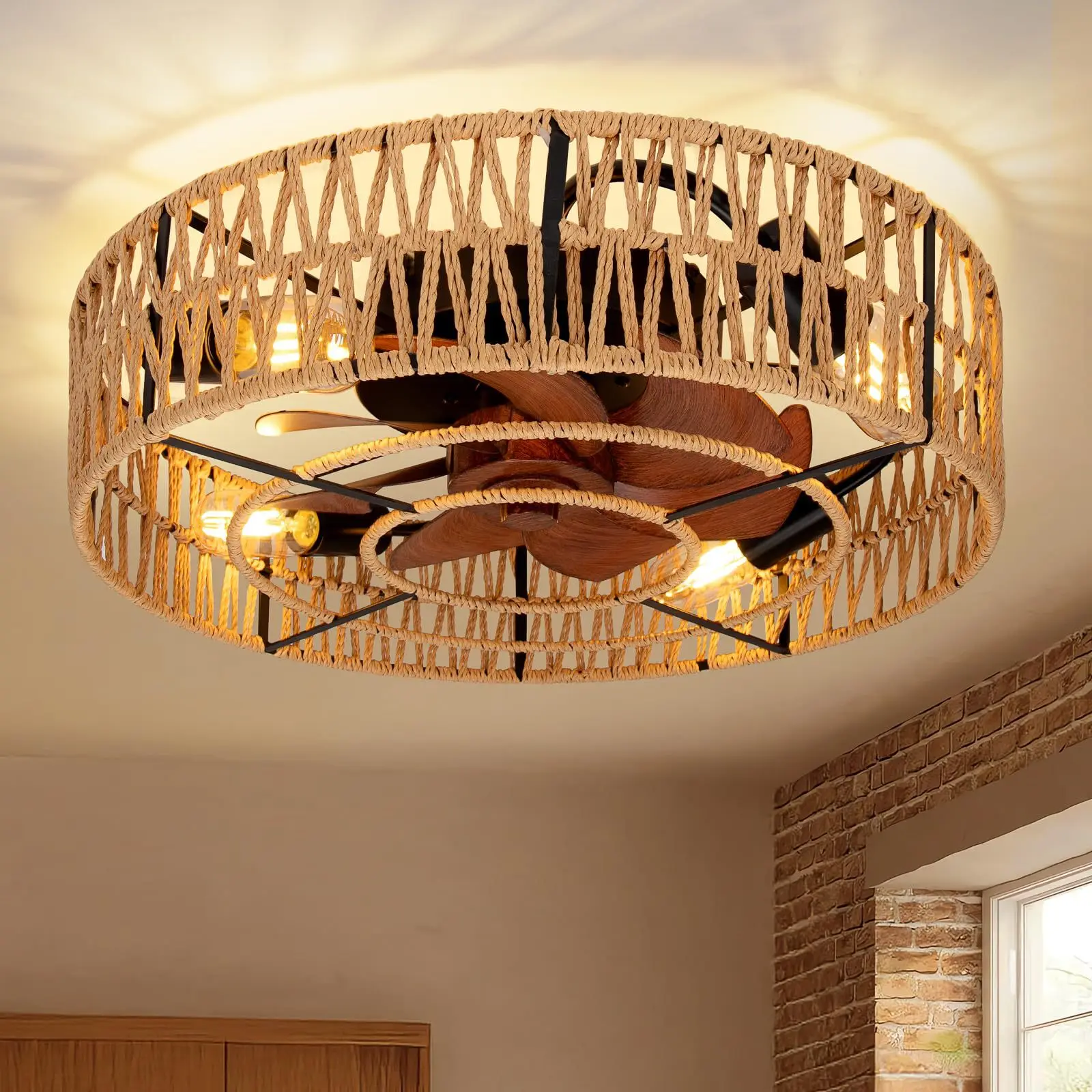
Rattan is a climbing palm, and the reason it dominates woven lighting is simple: it bends without snapping and holds a curve once shaped. That lets us do the rounded cages and flared silhouettes that define the boho look. Our Mexican-style vintage fan light combines rattan weave with hemp rope accents, and that pairing — smooth weave plus rough cord — is what gives the piece depth in person.
What buyers should know: rattan quality varies more than any other material we use. Good cane is even in color and diameter; cheap cane is blotchy and brittle, and no finish will hide it. When you compare two "identical" rattan fan lights with a 30% price gap, the cane grade is usually where the money went.
Bamboo: lighter, straighter, more architectural
Bamboo doesn't curve the way rattan does — it wants to stay straight. So bamboo shades tend toward slatted, geometric, Japanese-influenced shapes rather than round cages. Our Japanese farmhouse bamboo model leans into exactly that: clean lines, visible gaps, a shade that reads as architecture rather than basketry.
Two practical notes. First, bamboo is the lightest option, which matters more than people think on a rotating appliance hanging from a ceiling — less mass, less wobble, easier balancing. Second, bamboo's pale color shifts warm over years of light exposure. Most customers like the aging; just don't promise your clients it will stay factory-pale forever.
Jute rope: the underrated one
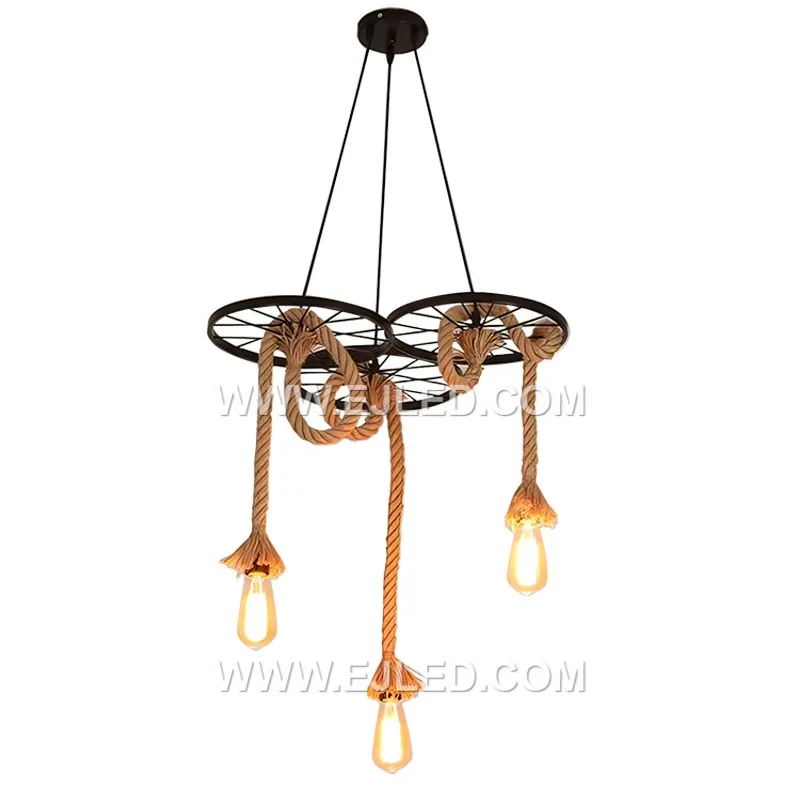
Honestly, jute-cord fixtures are the sleeper in this category. The rope is wrapped and knotted over an iron frame rather than woven freestanding, so the structure underneath is metal — which means jute pieces survive shipping better than anything else we make. Breakage claims on our jute-cord surface-mounted fan light run near zero.
The look sits between industrial and coastal: rougher than rattan, warmer than metal. If your market skews "American industrial" or "Nordic natural," jute gives you the texture story without the fragility story.
The comparison we give customers
- Best shapes: rattan for curves and cages; bamboo for slats and geometry; jute for wrapped industrial frames.
- Shipping resilience: jute first by a distance, bamboo second, rattan last (fine when packed properly — see our packing notes — but it demands that packing).
- Weight on the motor: bamboo lightest, jute heaviest.
- Price ladder: jute and bamboo usually land close; fine rattan weave costs more because it eats more hand-hours.
- Cleaning: all three want a dry brush or vacuum with a soft head. None of them want a wet cloth, whatever the listing photos of people happily wiping them suggest.
Mixing materials is where the catalog gets interesting
The designs that reorder best for us are rarely single-material. Rattan over an iron cage. Hemp rope trim on a rattan body. Wood-grain blades under a bamboo shade. The natural material carries the style; the metal carries the physics. When you evaluate a supplier's catalog, look for that engineering underneath the craft — a fan is a moving machine, and the shade is only the part you photograph.
If you're unsure which material fits your market, tell us what already sells for you in furniture or decor. Markets that buy rattan armchairs buy rattan fan lights; it maps almost one to one. And if you want one of each to compare in hand, that's exactly what the sample stage is for.