A confession from the factory side: spec sheets in our industry are written to be compared, not understood. Two fan lights can both say "remote control, three speeds, LED" and be entirely different machines to live with. So here is the checklist we walk serious buyers through, in the order the choices actually matter.
1. Motor: this is 70% of the product
The split is AC versus DC, and in 2026 the answer for anything mid-market or above is DC. A DC motor runs quieter (the difference is obvious in a bedroom at night), pulls roughly a third of the power, and supports six speeds or true stepless control instead of three coarse steps. The cost gap has narrowed to the point where we now default new designs to DC unless a buyer's market specifically demands old-style AC.
How to check without a lab: run the fan at its lowest speed. A good DC unit at speed one is nearly silent and absurdly slow — a lazy stir of air. AC units can't do that; their lowest speed is still a definite breeze with a definite hum.
2. Voltage: why we like ≤36V systems
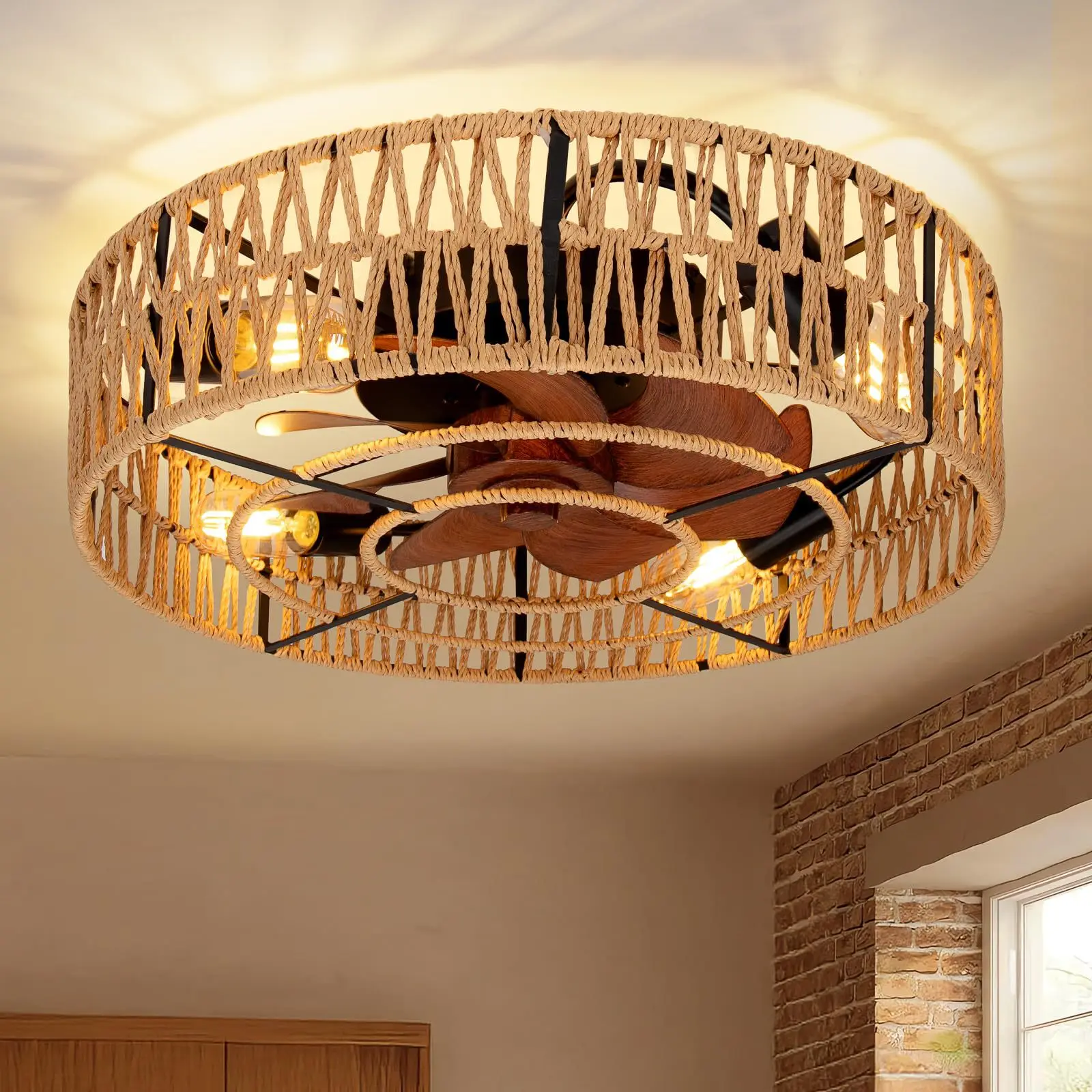
Most of our current range — including the bamboo farmhouse model with its stepless-dimming LED — runs the fan and light from a low-voltage driver at 36V or below. Three practical wins: safety clearances get easier in most certification regimes, the driver rather than the fixture absorbs voltage differences between markets (110V and 220V destinations use the same fixture with a different driver), and LED dimming is smoother at low voltage.
The trade: a driver is one more component that can fail, so ask who makes it and what the warranty covers. "Whose driver?" is a question that visibly separates factories with engineering opinions from factories with catalogs.
3. Control: remote is the floor, app is the option
Every modern fan light should ship with an RF remote — wall-switch-only control on a six-speed DC fan wastes the motor you paid for. App control adds a Wi-Fi or BLE module and maybe two dollars of cost, and whether it's worth it depends entirely on the buyer. Short-term rental operators love it; older domestic markets shrug at it.
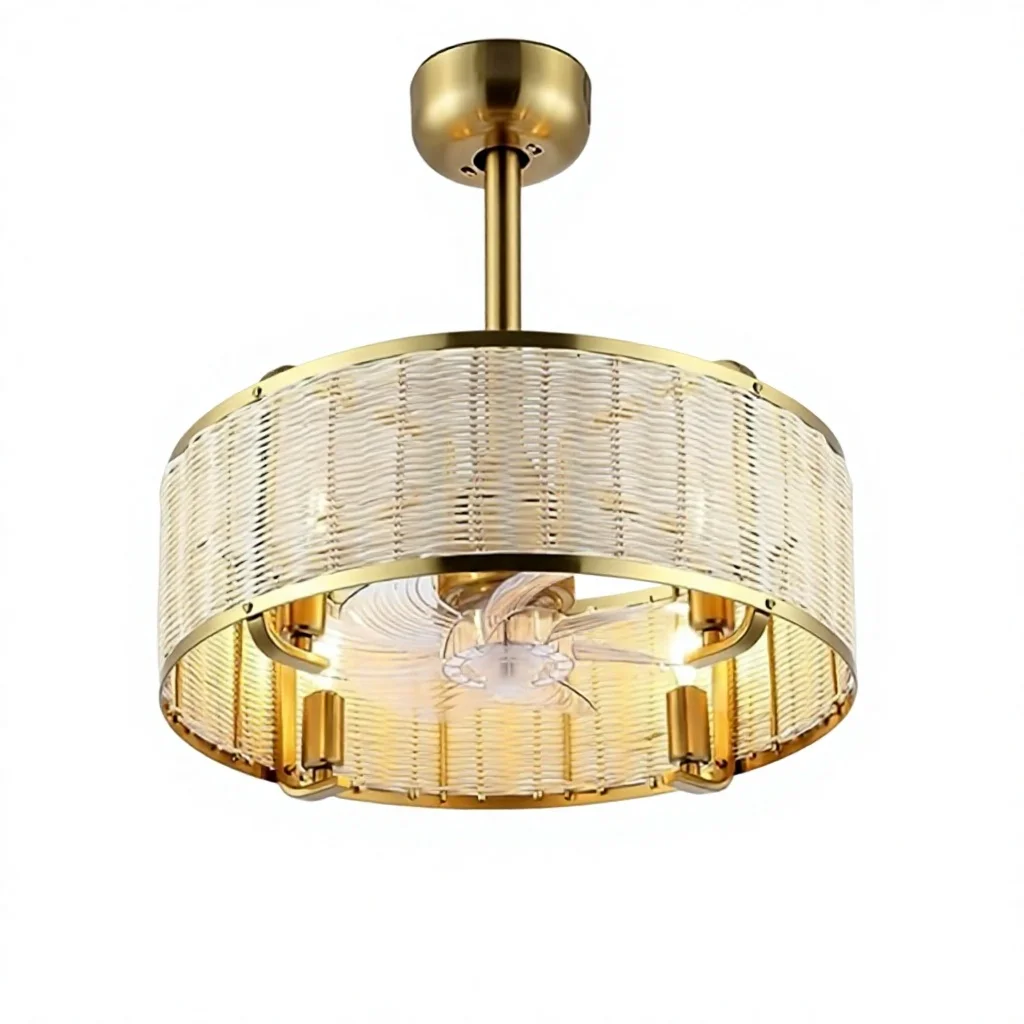
Our invisible-blade vintage model ships with both remote and app, and the honest usage pattern we hear back is: the app gets used the first week and the remote forever after — except for scheduling, which quietly becomes the feature people keep. Warm light on at dusk, fan off at midnight. Nobody mentions it in reviews; everybody uses it.
4. Blades: visible, invisible, and what it means for shipping
Retractable ("invisible") blades tuck into the body when the fan is off, which lets the fixture pass as a pendant light. Two things the brochures skip: retractable ABS blades must be balanced as a set — insist the factory tests spin-up wobble on every unit, not per batch — and the folded design actually packs smaller, which shaves real money off sea freight per unit. Fixed wood-grain blades, like on our straight-blade retro model, cost more cube but survive rough handling better. Neither is "better"; they're different freight and different showrooms.
5. The light itself: tri-color beats spec-sheet lumens
Buyers fixate on wattage; end users notice color temperature. A tri-color LED (3000K/4500K/6000K, switchable from the remote) satisfies the whole household argument about warm versus cool light and has become our default recommendation. If a fixture lists only "LED, white," ask which white — because your customers surely will.
The two-minute version
- DC motor unless your market demands otherwise. Test: lowest speed should be whisper-quiet.
- Low-voltage driver preferred; ask whose driver and its warranty.
- RF remote standard; app control if your buyers are young or rental-heavy; scheduling is the sleeper feature.
- Retractable blades save freight but demand per-unit balance testing. Fixed blades forgive handling.
- Tri-color LED ends arguments. Single-white LEDs start them.
If you want, send us a competitor's spec sheet and we'll annotate it — where it's solid, where it's fog. We do this for customers regularly and it's the fastest way we know to make a buyer dangerous in a good way at the negotiating table.